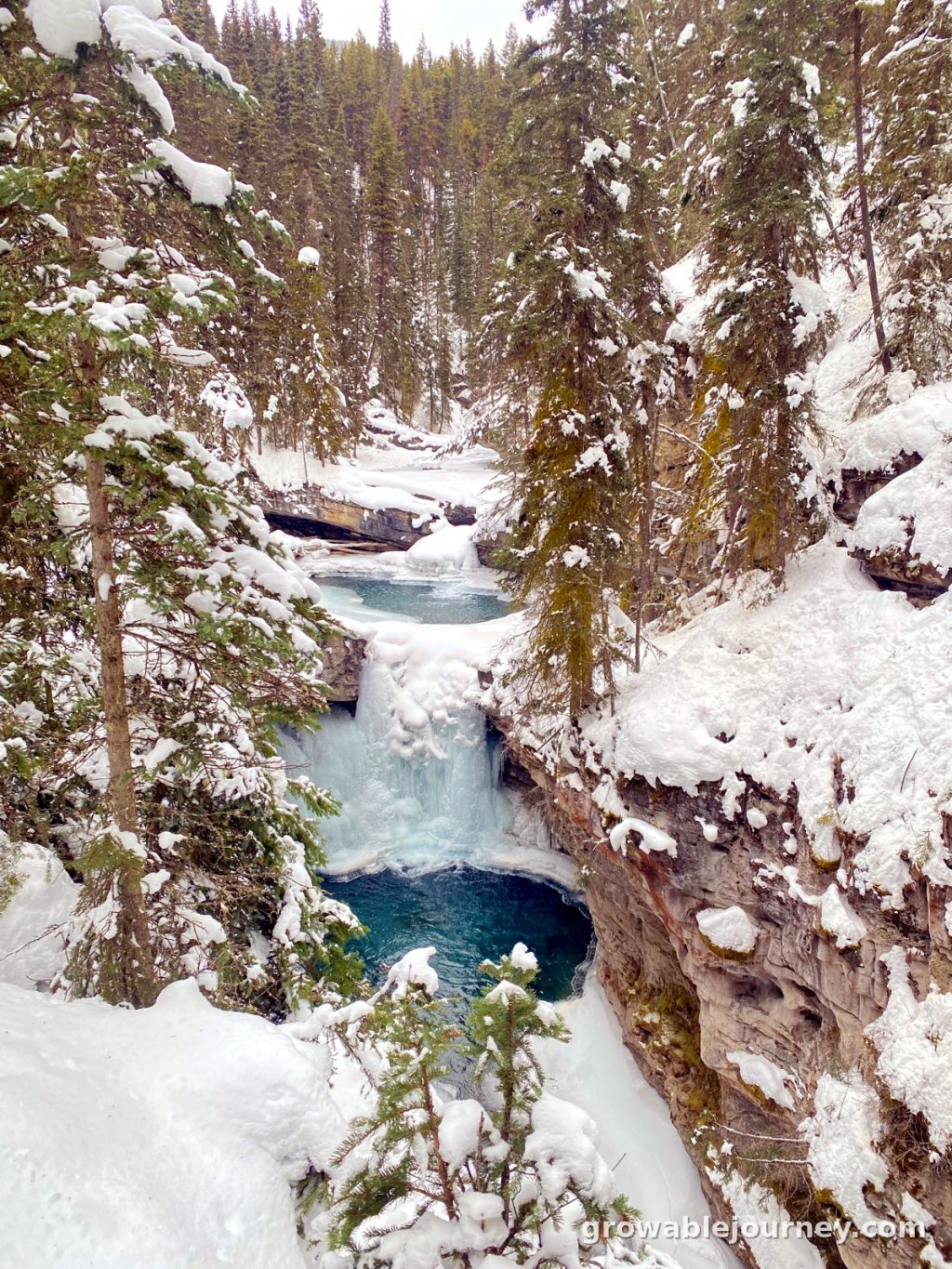
If Lake Louise is the postcard of a Banff winter, Johnston Canyon is the winter hike that surprised us the most. In summer it’s a pretty walk past rushing waterfalls. In winter, those waterfalls freeze into giant columns of blue ice, the catwalks are covered in fresh snow, and the whole canyon feels like walking through an ice gallery.
We went on a whim during our working holiday in Calgary, and it ended up being one of our favourite days in the Rockies. Here’s everything you need to know before you go: how hard it really is, what to wear, which falls to aim for, and why winter is honestly the best time to visit.
Johnston Canyon at a Glance
- Location: Bow Valley Parkway (Hwy 1A), Banff National Park — about 30 minutes’ drive from Banff town
- Cost: No separate trail fee, but you need a valid Parks Canada pass (2026 day pass: CAD $12.25/adult, $24.50/family)
- Hours: Open year-round, no set hours (go in daylight)
- Distances (from the trailhead sign): Lower Falls 1,155 m · Upper Falls 2,465 m · Ink Pots 5,515 m (one way)
- Time: Lower Falls ~1 hour return · Upper Falls ~2–2.5 hours return
- Difficulty: Easy to easy-moderate
- Must-bring in winter: microspikes (ice cleats) and trekking poles
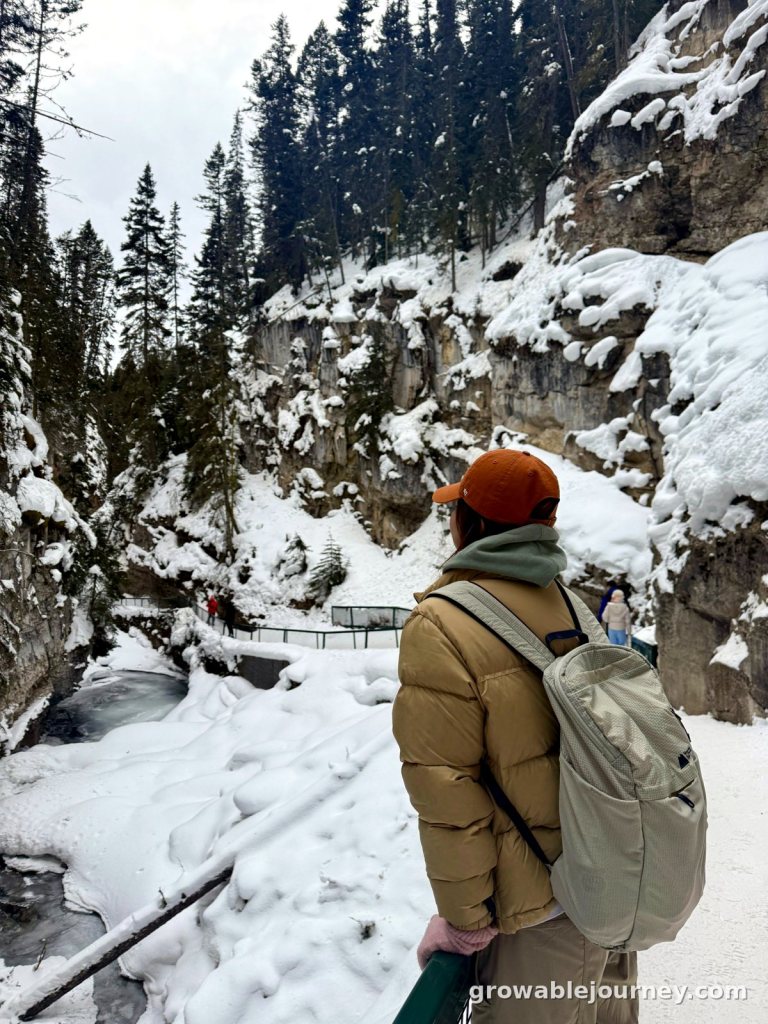
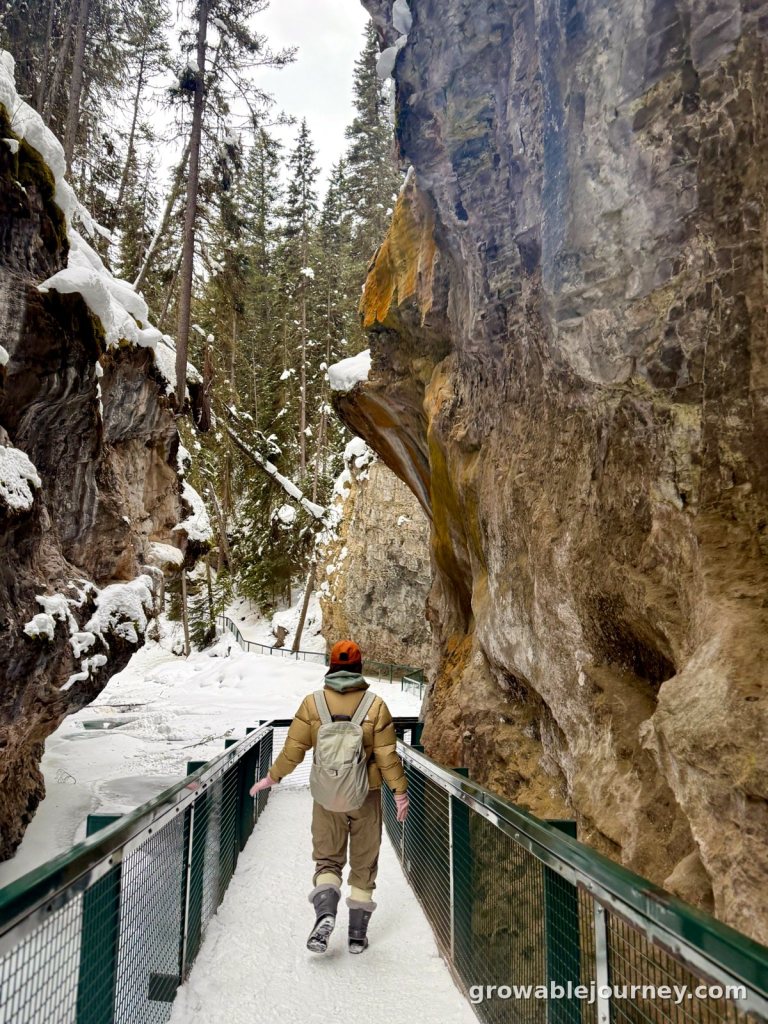
Why Winter Is the Best Time to Visit Johnston Canyon
Johnston Canyon is one of the most popular trails in Banff, and in summer that shows. The catwalks are narrow, so on a busy July afternoon the trail turns into a slow-moving line — and at the main photo spots, especially the Lower Falls viewpoint, it’s common to wait up to an hour just to step onto the platform. The parking lot fills early, and cars queue along the parkway.
From November onward, it’s a completely different place. We walked most of the trail with plenty of space around us, could stop wherever we wanted for photos, and never once had to queue at a viewpoint. Weekends and holidays still get busier, but compared with summer it feels almost peaceful. If you want Johnston Canyon at its most beautiful and its quietest, winter is the season.
Getting There & Parking
Johnston Canyon sits on the Bow Valley Parkway, the scenic road between Banff and Lake Louise. From downtown Banff it’s about 25 km, or roughly 30 minutes by car. There’s a large free parking lot right at the trailhead (your Parks Canada pass covers it).
- Arrive early or late. Even in winter, weekend mid-days can fill the lot. Early morning or late afternoon is usually easiest.
- Drive carefully after snowfall. The parkway isn’t plowed as quickly as the Trans-Canada Highway. If you’re not used to winter driving, consider the bus or a tour.
- No car? Take Roam Transit Route 9. In the off-season (fall, winter and spring) it runs on weekends and holidays from downtown Banff; in summer it runs daily. 2026 fare: CAD $5 one way for adults.
- Spring night closure: From March 1 to June 25, the eastern 17 km of the Bow Valley Parkway (Fireside to Johnston Canyon) is closed to all travel from 8 p.m. to 8 a.m. to protect wildlife. You can still reach the canyon from the Castle Junction side.
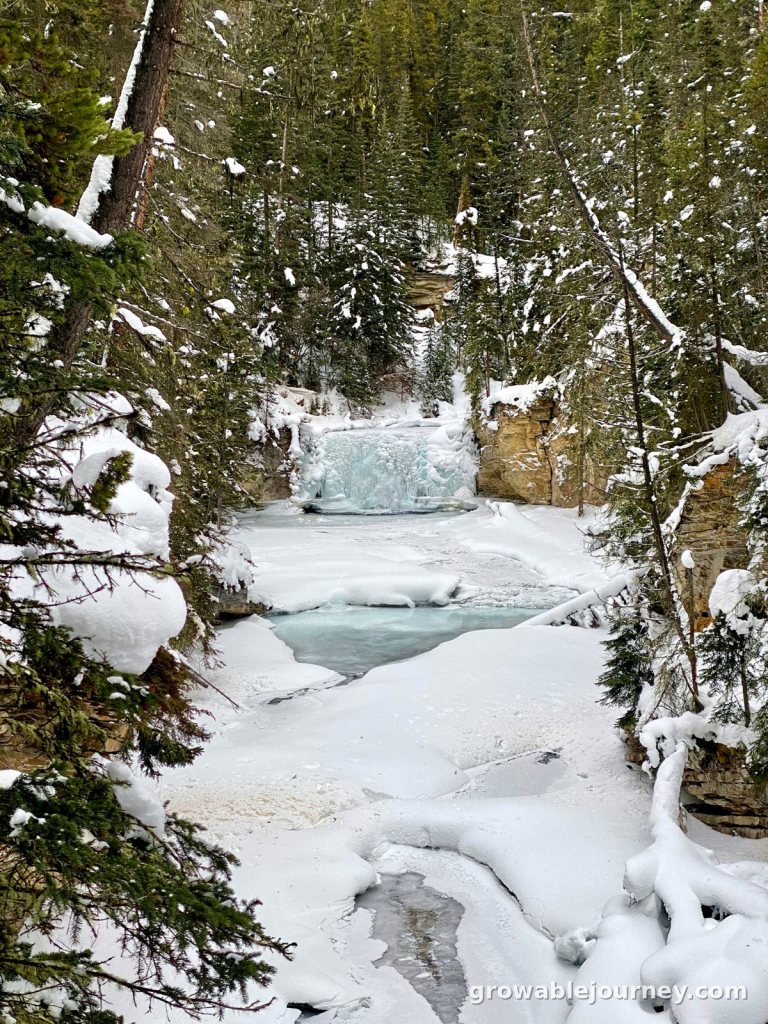
How Hard Is the Johnston Canyon Winter Hike?
Honestly, not very. I’d call it easy to easy-moderate. Most of the trail is well-maintained catwalk and gently sloping path, and even after heavy snow the route is easy to follow. If you can handle a long walk around a city, you can do the Lower Falls; the Upper Falls just take a bit more stamina.
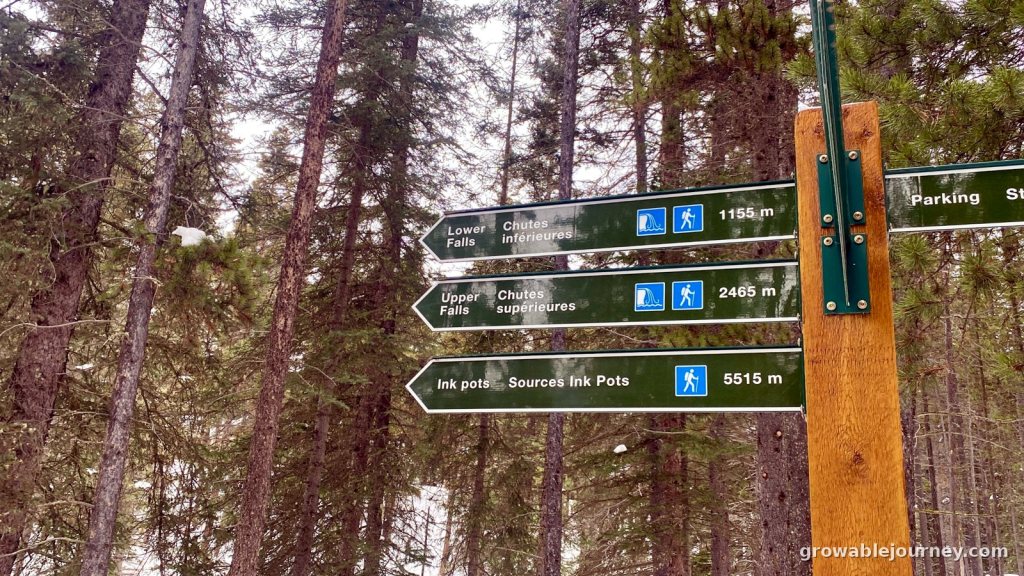
The real challenge in winter isn’t the distance — it’s the ice. Packed snow on the catwalks turns slick, and some downhill sections are like a slide. That’s why microspikes make such a big difference: with them on, the trail becomes genuinely easy.
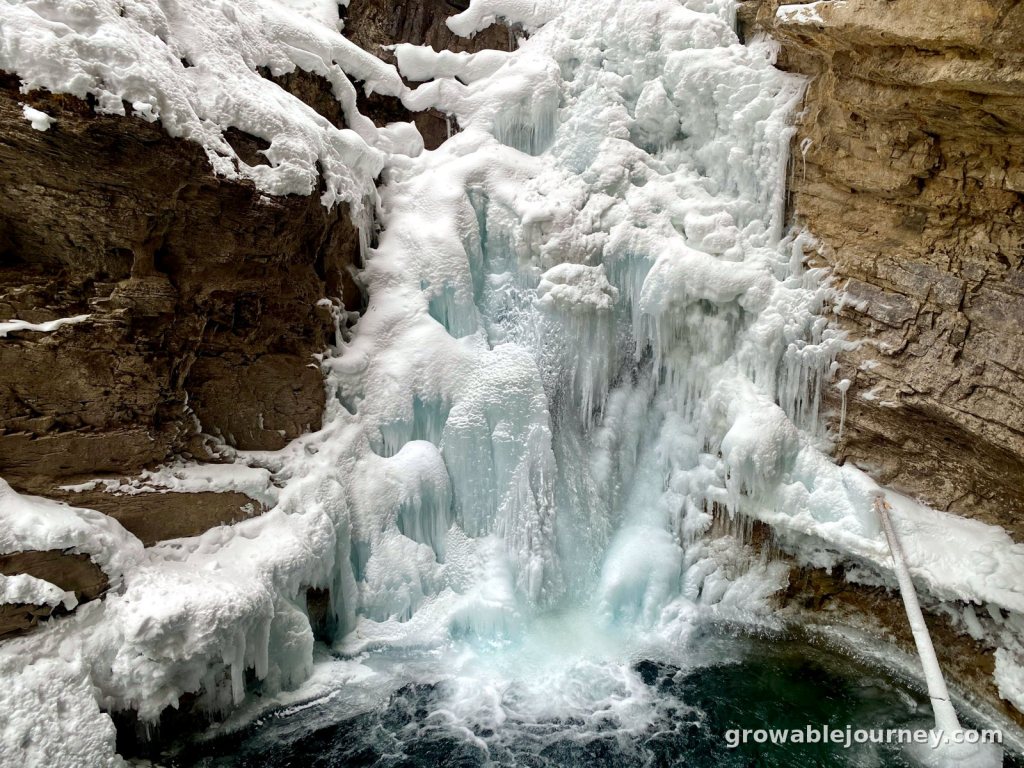
Lower Falls: The Highlight
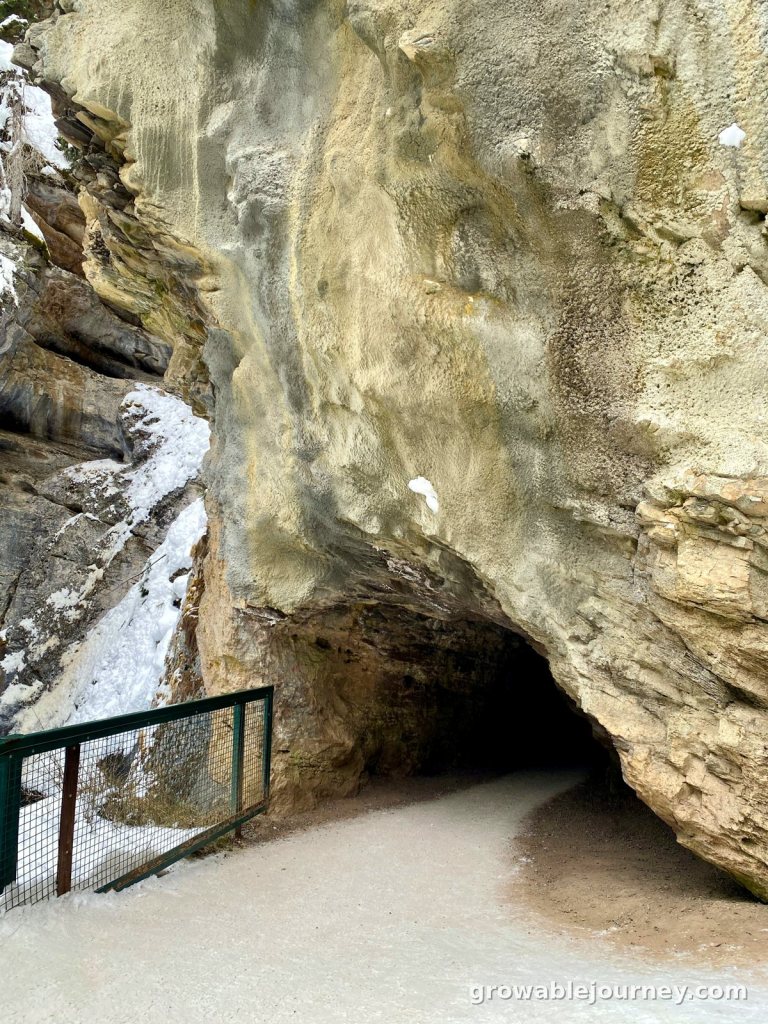
The Lower Falls are about 1.2 km from the trailhead, and in my opinion they’re the most beautiful part of the whole canyon in winter. To reach the best viewpoint, you duck through a short tunnel in the rock that brings you right up to the falls. In summer this is where the long line forms; in winter we walked straight in.
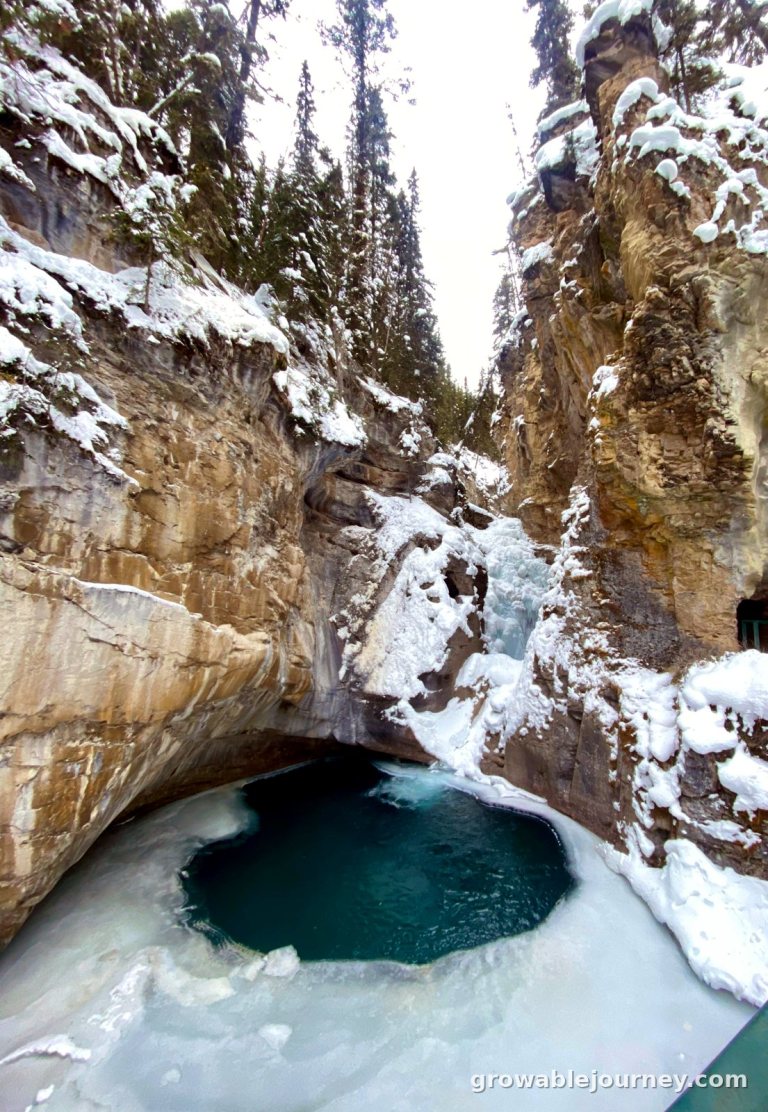
Up close you can see ice layered in thick sheets down the canyon walls, with that unreal turquoise water still moving underneath.
Upper Falls & Beyond
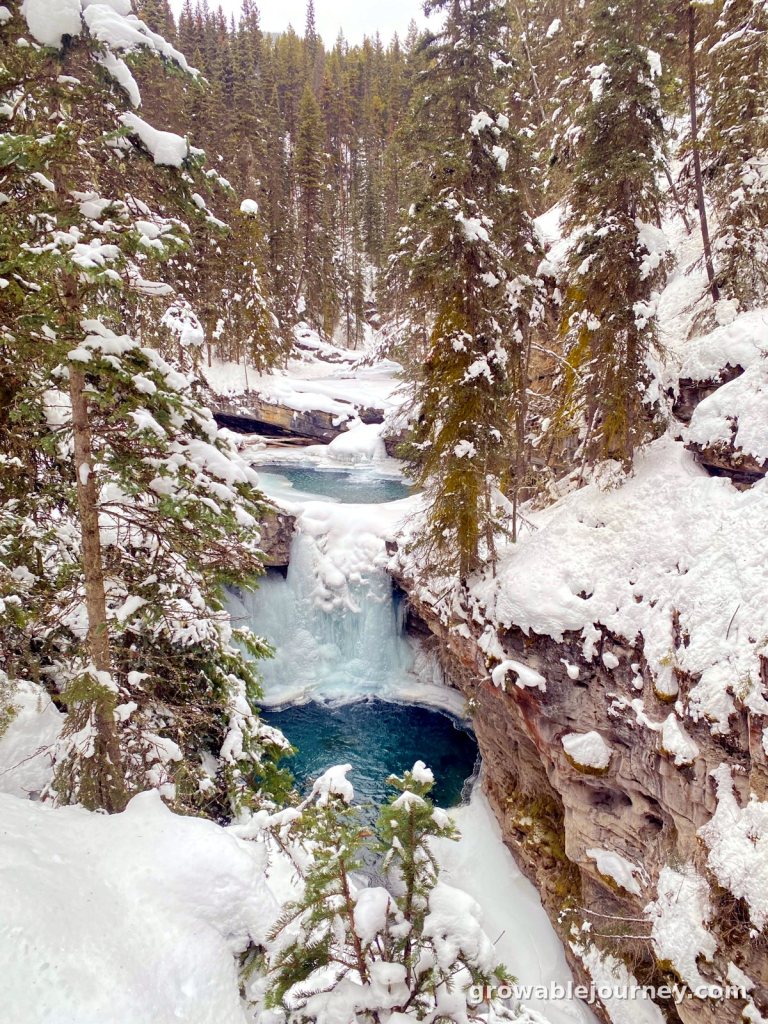
From the Lower Falls it’s another 1.3 km or so to the Upper Falls, roughly 2–2.5 hours return from the parking lot. The ice formations get much bigger the higher you go — the Upper Falls are a popular spot for ice climbers. Still, if I’m honest, I found the Lower Falls prettier. Go to the Upper Falls if you have the energy and want to see the scale of the ice, but don’t feel you’ve missed out if you turn back earlier.
Past the Upper Falls, the trail continues to the Ink Pots (5.5 km one way, about 4 hours return in total) — colourful mineral springs in an open meadow. We skipped them this time; in winter it’s a longer, snowier slog, better suited to experienced hikers.
A Fun (Slightly Silly) Memory
On the way down, a friendly hiker told us the most fun way back was to slide down one of the snowy slopes on the trail. So… we did. It was ridiculously fun! But that’s exactly why proper footwear matters — ordinary sneakers have zero grip here. If you do try it, pick a gentle stretch, stay on the trail and keep well away from the railings and edges.
What to Wear for Johnston Canyon in Winter
Unlike Lake Louise, where you’ll see people in long winter coats, almost everyone here is dressed for hiking. You warm up quickly once you start walking, so layers are key:
- Base layer: thermal/merino top that wicks sweat
- Mid layer: fleece or light down for warmth
- Outer layer: windproof, water-resistant jacket — a puffer or shell that’s easy to unzip as you warm up
- Pants: waterproof winter pants; cotton jeans get soaked by snow fast
- Footwear: waterproof hiking boots or insulated winter boots with good tread
- Extras: gloves, a beanie and a neck warmer are must-haves
Microspikes & Trekking Poles: Highly Recommended
We actually did this hike in grippy winter boots without spikes — and we made it — but we wouldn’t recommend copying us. Microspikes (ice cleats) that slip over your boots make the icy catwalks and downhill sections feel safe and easy. Trekking poles help a lot on the descent, especially for anyone who isn’t confident on ice.
You don’t need to buy them: several outdoor and ski shops in Banff town rent microspikes and poles by the day, so you can pick them up on your way to the trailhead.
Before You Go: Quick Checklist
- Valid Parks Canada pass displayed in your car
- Microspikes + trekking poles (rent in Banff if needed)
- Waterproof boots and layered clothing
- Check road conditions (511 Alberta) and Parks Canada trail updates — sections of the catwalk occasionally close for repairs
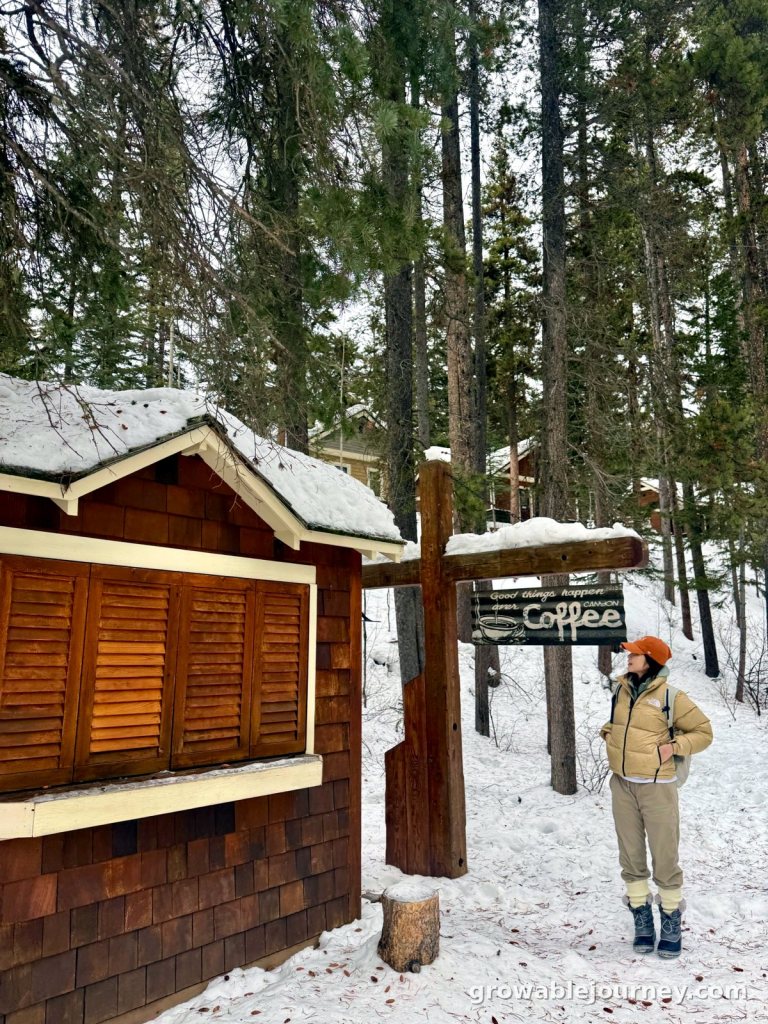
- Snacks and a warm drink; the trailhead café is closed in winter
- Start early to get parking and good light
Plan the Rest of Your Banff Winter Trip
Johnston Canyon pairs perfectly with a day on the slopes or a visit to Lake Louise. For more ideas, check out our 7-day Banff & Calgary itinerary, our Banff ski resorts comparison for 2026/27, and our guide to free parking in Banff.
If you’re craving a winter adventure in the Rockies that doesn’t require skiing or serious hiking experience, Johnston Canyon is the one. Grab your spikes and go!


Leave a Reply